

Mariah K. Lyons on Why This Was Her Brand’s Best Year
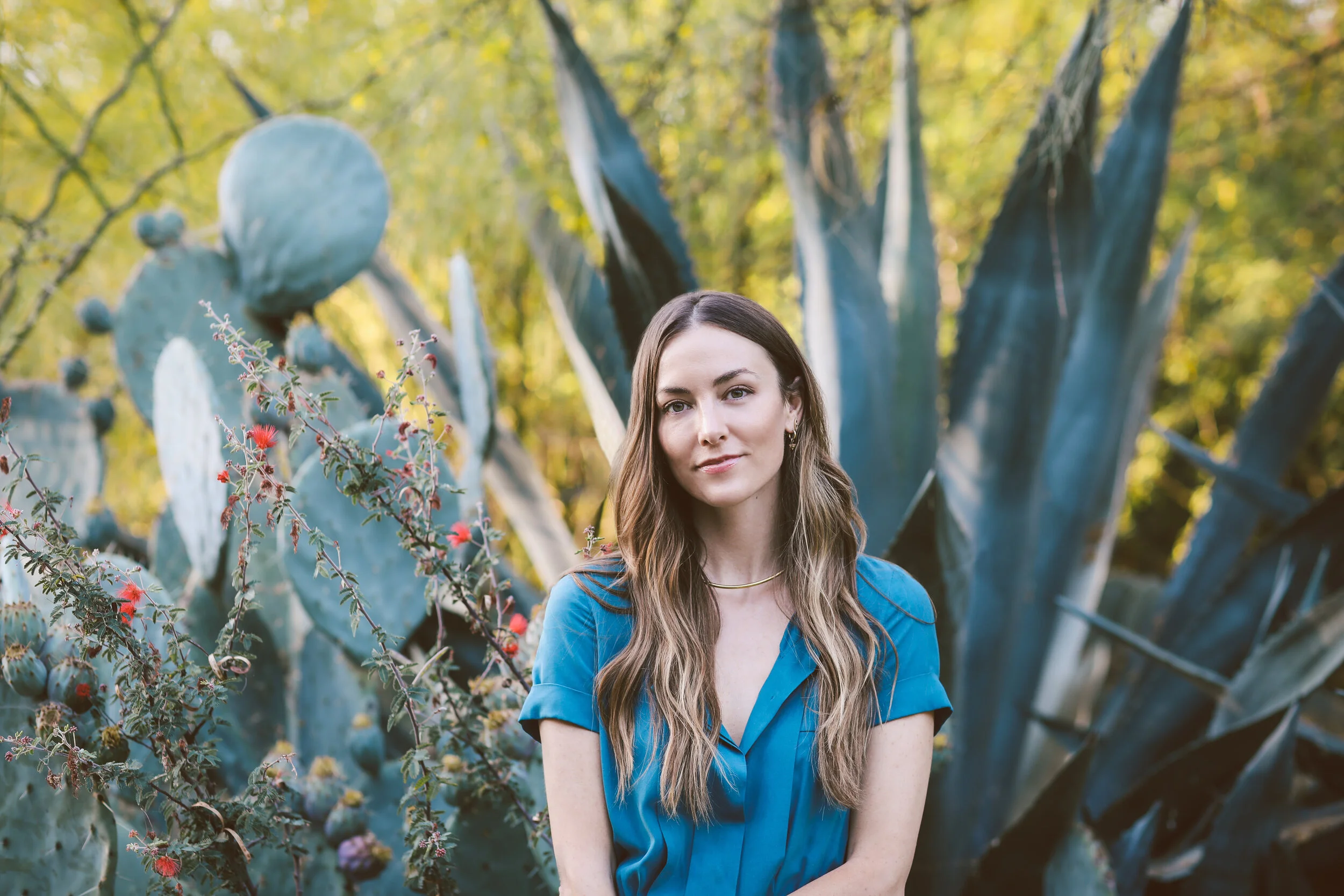
“I feel things through color, I feel things through texture — that's how I connect and that's how I get inspired.”

Mariah K. Lyons is the founder of ASTARA.
First of all, we hear you had a great year, business-wise!
I'm so glad that my overhead was so low because I was able to shift and evolve. We the best year, I think because we were able to be so nimble and we didn't bite off more than we could chew. It was organic growth. I think we’re in a phase where we see these companies that are just skyrocketing and we somehow expect that. You look at Janessa Leone and she's been around 10, 15 years and she’s had incremental growth that's stable, that's sustainable.
What key learnings do you feel contributed to that success?
I think being nimble and I think also planning ahead. We offered some different price points, so we offered some different offerings — I'm calling them energetic essentials. They're more tools that people could use at home and were a little bit of a lower price point and very accessible and attainable and hands-on.
So much of the work is teaching people how to think. You give a manifesto, you teach them how-to fashion. It's like so much of my work, so much of the business is teaching people these tools that they can then utilize in their life, in their home, with their family, with their friends. And so it was really that, you know. Activating that healer within and that self-soothing and de-stressing. It's like, okay, what is the need at this exact moment and how can I fulfill that and how can I help support that? And where are people right now energetically and what do they need?
That is so important because I feel like for a lot of people, their egos get in the way of growth and feedback and they turn that away because they had a mission and they need to fulfill it. Sometimes it's beautiful to evolve and modify in real time.
Yeah. I like being able to test the market. I like to launch things and see how they do. And then from there, being able to go out, build out, and expand. I think especially now with so much shopping available on social media, we're able to test things and do pre-orders. We can find out: Do people want this? Is there a space for it? If so, let’s move ahead and actually expand out from there. In the past, people would do these huge production runs, have all the stuff ready, and then do this big splashy launch and it either did well or flopped. If it flopped, they had all this inventory that they would then knock down in price. I feel like it's a more organic and sustainable model to be a little bit more nimble, test the market, and grow out.
What was the Lightbulb Moment that inspired you to fully dive into what you do?
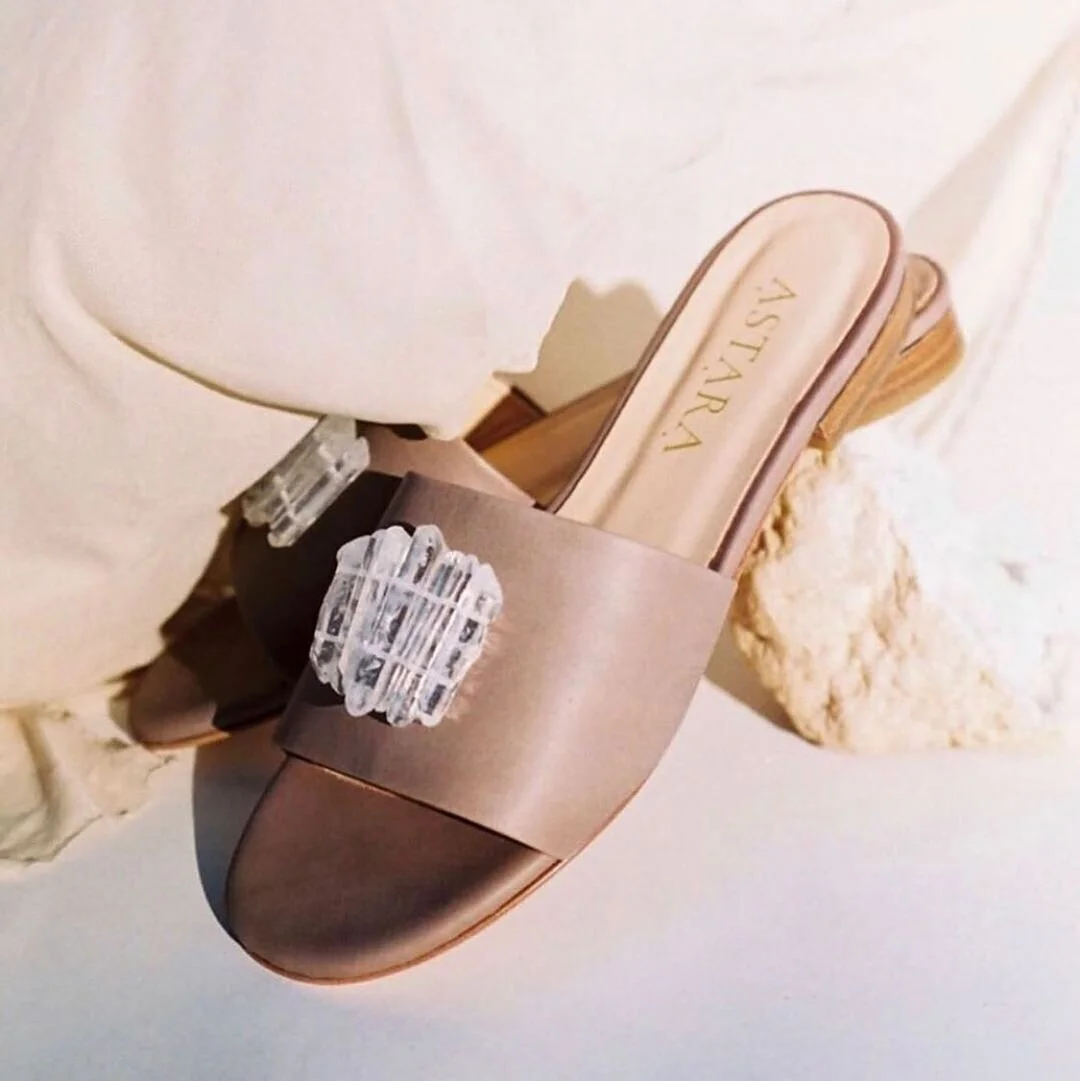
There were a couple. I would say the actual idea for the product came in when I was still at Jimmy Choo. I was still teaching and I was still studying, but I wasn't like full-blown, so the idea came in at that point of the white space in the market and something that was needed — but I had no idea what to do with it. I literally got the idea and I was like, cool, that would be amazing. I could imagine other people need that, but I have no idea how to do it. And it was just so overwhelming and daunting.
Then a couple of years later I was teaching and doing trainings and I was actually sitting with a mentor of mine. We were just kind of talking about what was coming into my space and what was what was going on in my life. And I said, you know, there's been this thing that's been knocking at my door and will not leave me alone. I feel like it's like haunting me in a good way, but just like never leaving my space. I said it out loud and there was like this electricity in the room and we looked at each other and we were like, oh, okay, I'm here. But we didn't even have to say anything. It was just like, yeah, this is this needs to happen. It's like that alignment, that electricity where you're like, I'm doing this. I'm the vessel that's going to bring this forth and I'll take the necessary steps. And so then from there it took about a year and a half, two years to like do the research and find the production manufacturing facility to put all of the ducks in a row.
How long were you at Jimmy Choo and was that your first big career move before you jumped full into the wellness space, full into being a business owner?
I was a professional dancer, so I was in L.A. dancing professionally in TV and films. I did that for about five years and then from there transitioned into fashion. I was still like interning and doing stuff and being a sales assistant and styling when I was dancing, so there was some overlap. Then I was a Jimmy Choo for about four and a half, almost five years. It was in there that I was like, this specific corporate life isn't for me and that trajectory was not right in my element, but the skills that I gained I am so grateful for because they completely transitioned into what I'm doing now and and also then having the wellness in between.
Did corporate life help you build a strong business?
You're trained in a specific way. I think it continues to strengthen your work ethic and I think it continues to strengthen working with more people and having a lot of different experiences because you never know how that's all going to lay out. And it's been so fascinating to see the different skills and different people from all these different past lifetimes that are woven into the now. That training and that education really is immeasurable.
What’s the most unexpected thing you’ve learned in your current career?
Yeah, I mean, I think a lot there's a lot. Again, it took me it took me a long time to find even my name, like my production company and just like it. There was a lot of robocalling. Also, I was creating a product that didn't exist in the world, so I had to explain to people the blueprint.
But I think a big one for me, which has been really interesting, was thinking that I was going to go both direct-to-consumer and wholesale. I got a lot of opinions on both sides. Some people from the get-go said to go DTC and create a specific retail structure to support that. And then on the other side, [some said] to do wholesale because it gets your brand out there, that you'll be spending so much money on ad sales or marketing or whatever. So I was like, I'll go down the middle. I'll do some direct to consumer, I'll be in some retail.
For me, the wholesale was — I'm not going to say disastrous, but it was just not supportive of the business. I realized very early on, again, because we were a new product and because we really had to tell our own story and no one could really tell it like we could. And so I can't even expect a salesperson in a store to be telling it or to be selling it like we were.
You know, retail has had a hard time in the past couple of years, so this is often a story that is not talked about in the fashion space at all, but wholesalers that don't pay on time or you've already delivered goods and they haven't paid and you've paid your manufacturers — I became a bill collector. I really had to [think about] where do I want to place my energy? What is good for me? What is good for the business? So when quarantine started and the beginning of this year, I had been wanting to go back to DTC and so I just decided to pull my wholesale partnerships, go direct-to-consumer, lower the price point to take out that wholesale margin, and see how it went. It was received really well.
What I would say is, continue to trust yourself. You're going to get advice on both sides anyway: Some people are going to say raise money, some people are going to say absolutely not, keep one hundred percent of your company. You're always going to get completely different advice. And the end of the day, you're going to have to listen to yourself and you're going to make mistakes and hopefully you're able to shift and course correct, early and small. But it's not devastating.
How important is brand identity to you?
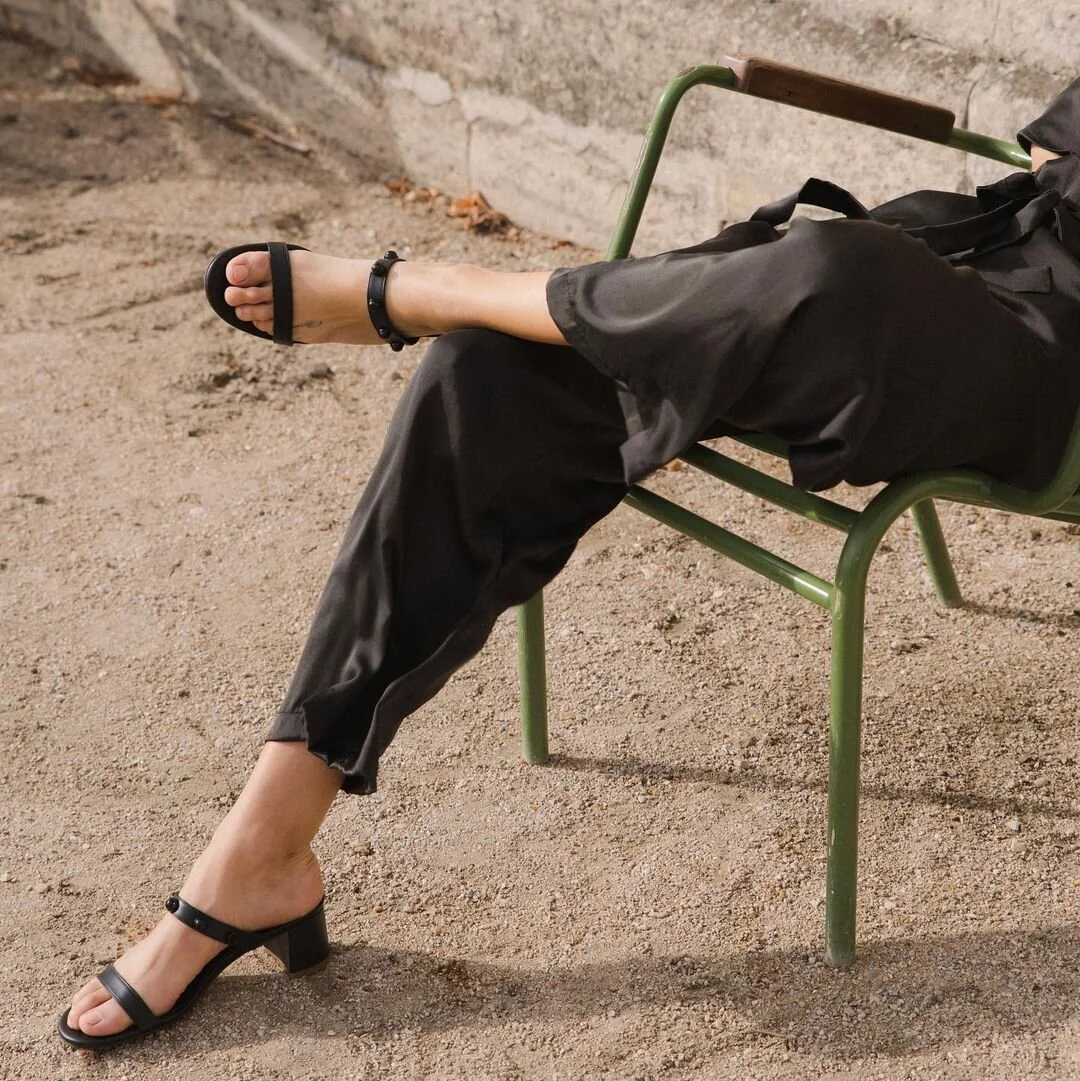
I think that visual storytelling is important to me. I feel things through color, I feel things through texture — that's how I connect and that's how I get inspired. Especially because we do work with a lot of natural elements of the Earth. There are natural pigments and these things that are very evocative and very bright. I think now more than ever, people look at an Instagram account before going to a website, so it's like you want immediately to understand right away what the brand is, what they're doing. So, yeah, I do think that's important.
So much of it is homegrown; A lot of the photos I've had to take myself. Yes, we may put some money into a big shoe or into X, Y, and Z, but then a lot of the stuff comes down to you. So as a creative, it's helped me stretch because you don't really have an option all the time to be able to pay for X, Y, and Z. Luckily there are so many apps and things that are available to us now as creators that's it's a little bit easier than it used to be.
What are you doing during this overwhelming time to kind of keep yourself in check and take care of yourself?
Meditation is my forever go-to in the morning, and has been for 15 years now. Right now in Utah: I came this fall to have some more time in nature and just I was listening to my body. I think listening to what we need — if it's going for a walk outside, if it's taking an hour drive and getting to the mountains somewhere — like really listening to what our system needs and especially being in nature right now [can be] so deeply restorative because all of our systems are on hyper-overdrive and very we're taking in a lot of extra information. The more that we can ground and be in nature and calm the nervous system, the better we are able to handle the stresses that are coming at us right now.
Do you have anything exciting coming up with yourself or your brand that we should know about?
Well, I just launched my book, Crystal Healing for Women, and it's available everywhere books are sold. I'm doing another crystal healer training program through ASTARA. We've been doing more digital retreats and we've been doing more educational series as well. And now we have a holiday collection coming out — a little gift box.
Nov 20, 2020
As told to Natalie Alcala and edited by Ashley Tibbits